




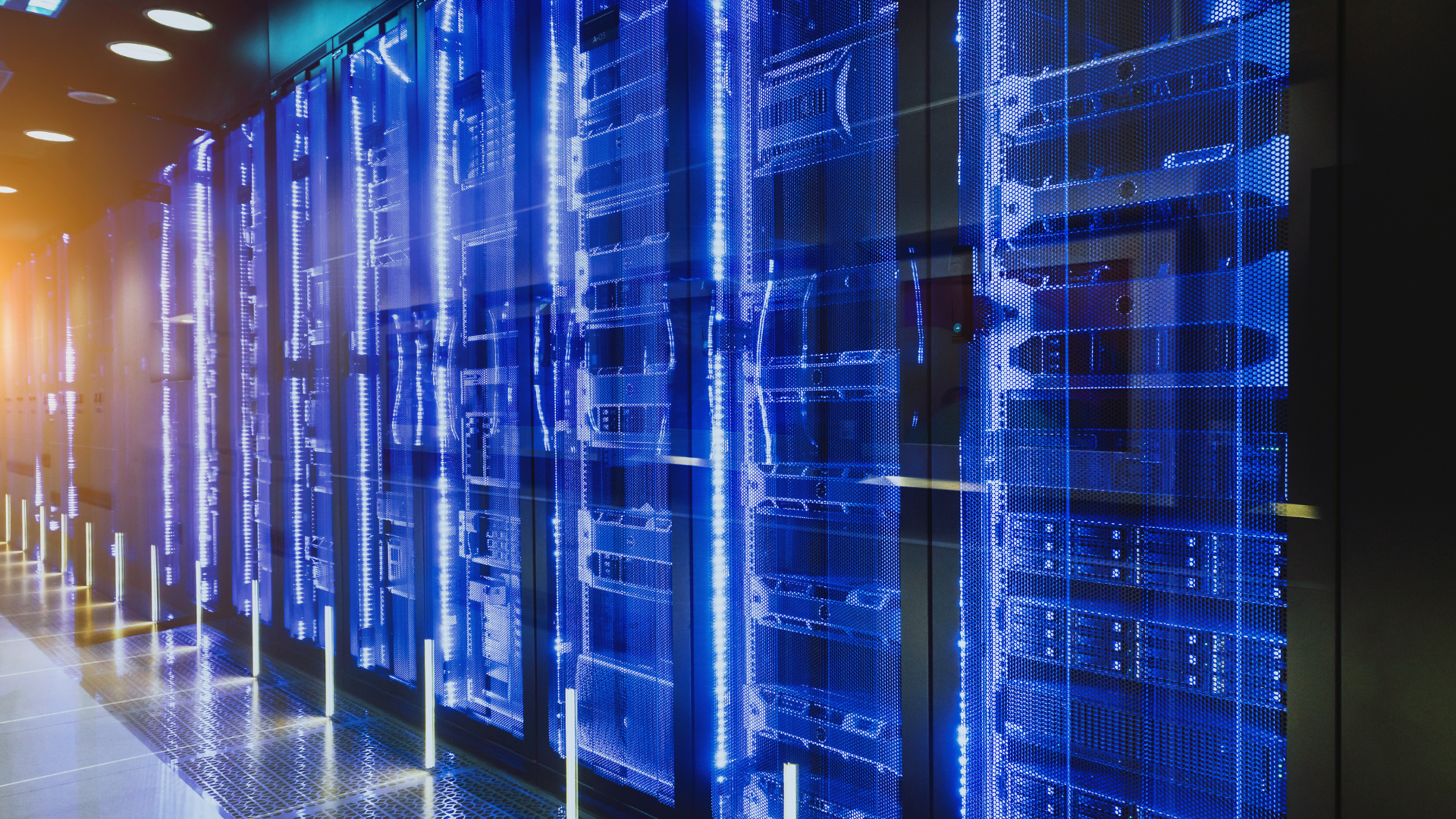

Data centers are now part of the infrastructure conversation in almost every community, utility boardroom, industrial development plan, and technology roadmap. They support cloud computing, artificial intelligence, enterprise systems, public services, financial platforms, healthcare applications, and the connected tools that modern businesses depend on every day.
At the same time, it is fair to acknowledge that data centers raise serious questions about power, water, land use, resilience, and community impact. Reasonable people can debate where data centers should be built, how fast they should scale, and what responsibilities operators should carry. That broader debate matters, but this post is focused on something more operational and immediate: once these facilities exist, they must be managed with discipline, transparency, and measurable environmental responsibility.
That is where SitePro’s work comes in.
Our core business is industrial automation. We design and deploy systems that help operators monitor, control, optimize, and protect complex industrial environments. But our vision has always been bigger than automation for automation’s sake. We believe better data, better controls, and better operational visibility can support sustainability in every environment where we work.
For data centers, that means partnering with operators not only to deliver exceptional automation solutions, but also to help them use critical resources more intelligently. Two areas are especially important: smart water usage and key asset management.
The data center sustainability challenge is operational
The growth of data centers is not theoretical. The International Energy Agency reported that data centers accounted for about 1.5% of global electricity consumption in 2024, or roughly 415 terawatt-hours, and projects that data center electricity use will more than double to around 945 terawatt-hours by 2030. The IEA also notes that the United States represented the largest share of global data center electricity consumption in 2024.
In the U.S., the Department of Energy has highlighted data center deployment as a significant driver of near-term electricity demand growth, citing an Electric Power Research Institute estimate that data centers could grow from 4% of total U.S. load in 2023 to as much as 9% of U.S. electricity generation annually by 2030.
Those numbers are important, but they are not the whole story. The sustainability challenge is not just about how much infrastructure exists. It is about how intelligently that infrastructure is operated.
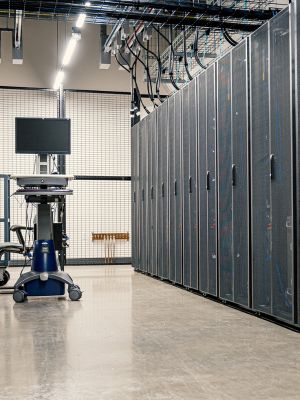
A data center is a living industrial environment. Pumps, valves, cooling towers, chillers, heat exchangers, air handling equipment, electrical systems, backup generation, treatment systems, sensors, meters, and controls all have to work together continuously. Small inefficiencies can become large resource losses. Unnoticed drift can become unnecessary water consumption. Poor visibility can turn a manageable issue into an outage, an environmental concern, or an avoidable maintenance event.
Sustainability, in this context, is not an abstract corporate statement. It is an operating discipline.
Smart water usage starts with measurement
Water is one of the most important and most misunderstood parts of the data center conversation. Cooling strategies vary widely depending on geography, facility design, climate, energy availability, and operator priorities. In some cases, water-based cooling can reduce energy demand compared with other approaches. In other cases, water availability or local watershed stress may change the equation entirely. Google, for example, describes its own approach as balancing carbon-free energy availability, responsibly sourced water, and alternatives to freshwater depending on each campus.
That is exactly why visibility matters.
You cannot optimize what you cannot measure. Lawrence Berkeley National Laboratory notes that data center water efficiency is often overlooked and recommends metering and monitoring systems to track water consumption as a high-level best practice. It also emphasizes that water use should be viewed holistically, from IT equipment to the cooling systems required to maintain the proper operating environment.
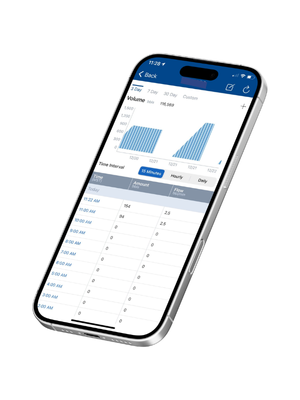
For SitePro, smart water usage means helping operators move from reactive reporting to active management. That includes real-time monitoring of water flows, cooling tower performance, makeup water, blowdown, leak conditions, pressure changes, basin levels, treatment system performance, and other site-specific variables. It also means making those data points useful through dashboards, alerts, historical trends, automated controls, and clear operational context.
Water Usage Effectiveness, or WUE, is one metric operators use to understand water efficiency. Microsoft defines WUE as a measure of how a data center uses water relative to electricity consumed, calculated by dividing annual liters of water used for humidification and cooling by annual kilowatt-hours used to power IT equipment.
Metrics like WUE matter because they turn sustainability into something measurable. But metrics alone are not enough. The real value comes when measurement connects to action.
That is where automation changes the game.
From monitoring to optimization
Traditional monitoring tells an operator what happened. Modern industrial automation should help operators understand what is happening, why it is happening, and what should happen next.
In a data center environment, that can mean identifying abnormal water consumption before it becomes a major issue. It can mean detecting cooling system inefficiencies caused by fouling, scaling, valve misalignment, pump degradation, control loop drift, or sensor failure. It can mean helping teams compare water consumption against load, weather, operating mode, and system health.
The goal is not simply to collect more data. The goal is to create operational intelligence.
A smart water management strategy may include:
Real-time metering across critical water systems.
Automated alerts for abnormal flow, pressure, level, or consumption patterns.
Historical trending to identify seasonal changes, equipment drift, or recurring inefficiencies.
Integration between water data, cooling performance, and facility load.
Control strategies that reduce waste while maintaining uptime and thermal reliability.
Reporting that supports internal sustainability goals, customer requirements, and community transparency.
This is where SitePro’s industrial automation background is especially valuable. Data centers are often discussed as technology assets, but they are also industrial facilities with demanding mechanical, electrical, and environmental systems. The same automation principles that improve reliability and efficiency in other industrial environments can help data centers operate with greater resource awareness.
Asset management is sustainability management
Water is one part of the equation. Asset management is another.
Every critical asset in a data center has a sustainability footprint. A pump that is operating outside its efficient range consumes unnecessary energy. A valve that is not responding correctly can affect water use, cooling performance, and system reliability. A poorly maintained heat exchanger can force the rest of the system to work harder. A failing sensor can create bad data, and bad data can lead to bad decisions.
In high-availability environments, asset management is often viewed primarily through the lens of uptime. That makes sense. Data centers must be reliable. But reliability and sustainability are not competing priorities. In many cases, they are the same discipline viewed from different angles.
Well-managed assets tend to run more efficiently. They fail less often. They provide better data. They support better planning. They allow operators to maintain performance while reducing waste.
The Uptime Institute’s 2025 Global Data Center Survey summary describes an industry facing rising costs, worsening power constraints, and the need to address availability, efficiency, staffing challenges, supply chain delays, and AI-driven demands. Asset intelligence directly supports that challenge because it gives operators a clearer view of what they have, how it is performing, and where attention is needed.
For SitePro, key asset management means connecting equipment data to operational decisions. It means helping teams understand asset health, maintenance priorities, runtime, duty cycling, alarm history, utilization, performance degradation, and risk. It means moving beyond clipboards, disconnected spreadsheets, and siloed systems toward a more complete operating picture.
The role of industrial automation in sustainable data center operations
Industrial automation is often associated with efficiency, uptime, and labor savings. Those benefits are real, but they are only part of the story.
Automation also supports sustainability because it enables precision.
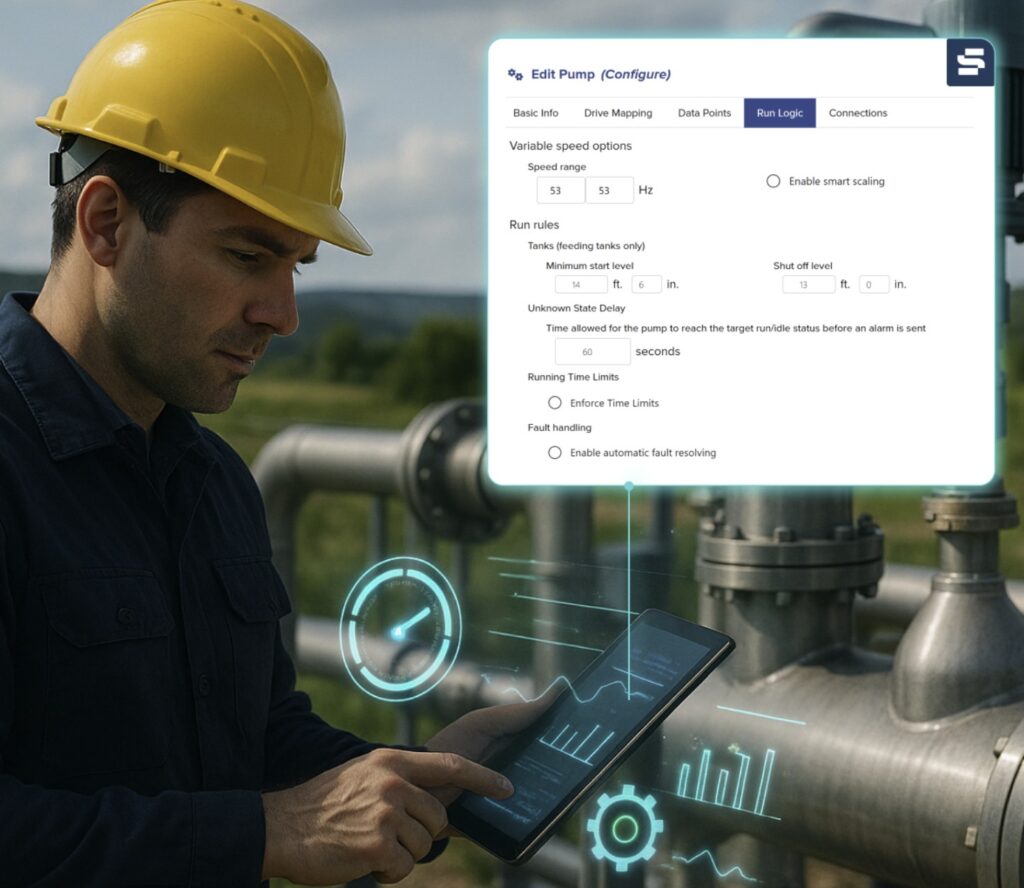
A well-designed automation system can help operators control pumps more intelligently, sequence equipment more efficiently, maintain environmental conditions without overcooling, detect leaks earlier, reduce unnecessary cycling, identify equipment drift, and document performance over time. It can also help teams standardize operations across multiple sites while still respecting local conditions.
That last point is important. Sustainability is not one-size-fits-all.
A data center in a water-stressed region has different priorities than one in a region with abundant reclaimed water. A facility using evaporative cooling has different operational considerations than one using air cooling or liquid cooling. A hyperscale campus has different complexity than an edge facility. Even within the same company, each site may have different utility constraints, climate conditions, local expectations, and equipment configurations.
Automation provides the framework to manage that complexity.
SitePro’s approach is to help operators build systems that are practical, scalable, and grounded in real operating conditions. That means combining field instrumentation, control systems, SCADA, telemetry, analytics, alarm management, reporting, and integration with existing maintenance or enterprise platforms. It means designing solutions that operations teams can actually use, not just dashboards that look impressive in a conference room.
Sustainability requires trustworthy data
One of the biggest challenges in sustainability reporting is trust. Operators need confidence that the numbers they report are accurate. Communities need confidence that resource claims are backed by evidence. Customers need confidence that infrastructure partners are operating responsibly.
Trustworthy data begins at the asset level.
Is the meter calibrated? Is the sensor reading correctly? Is the data timestamped? Is the alarm meaningful? Is the historian preserving the right information? Can the operator distinguish between normal variation and abnormal consumption? Can leadership see performance across sites without losing the operational detail needed to explain the numbers?
These questions matter because sustainability claims are only as strong as the systems behind them.
At SitePro, we see environmental optimization as an extension of operational excellence. The same rigor that protects uptime should also protect resource performance. The same discipline that supports safety and reliability should support water stewardship and energy awareness. The same automation platform that helps an operator respond to a fault should help identify waste before it becomes normalized.
Moving from compliance to continuous improvement
Compliance will always be important. Data centers must meet regulatory requirements, utility agreements, environmental permits, customer expectations, and internal standards. But sustainability leadership requires more than checking a box.
It requires continuous improvement.
That means using automation and asset intelligence to ask better questions:
Are we using more water than expected for this load and weather condition?
Are cooling assets performing as designed?
Are control loops tuned properly?
Are alarms helping operators act earlier, or are they creating noise?
Are maintenance activities reducing resource waste?
Are we comparing performance across sites in a meaningful way?
Are we giving leadership accurate, timely, and actionable sustainability data?
Are we designing systems that can adapt as cooling technologies, water strategies, and reporting requirements evolve?
These are not abstract questions. They are daily operational questions. And they are exactly the kinds of questions industrial automation is built to answer.
A practical vision for responsible infrastructure
The conversation around data centers will continue. It should. Communities, utilities, developers, customers, and policymakers all have legitimate interests in how digital infrastructure is built and operated.
Our role is not to dismiss those concerns. Our role is to help address them with better systems.
At SitePro, we believe the path forward is practical, measurable, and operational. Data centers need automation that does more than keep equipment running. They need automation that helps operators understand resource use, optimize performance, protect critical assets, and support sustainability goals with real data.
That means smart water usage.
It means better monitoring of key assets.
It means turning operational data into action.
It means recognizing that environmental optimization is not separate from industrial automation. It is one of the most important outcomes industrial automation can deliver.
Whether we are working in data centers, energy, water, manufacturing, or other industrial environments, our vision remains the same: build smarter systems that help operators make better decisions. Better decisions improve uptime. They reduce waste. They extend asset life. They support safer operations. And they create a stronger foundation for sustainability in every situation.
Data centers are part of the modern infrastructure landscape. The question is not only whether they will grow. The question is how responsibly they will operate as they grow.
That is the work we are focused on.
And it is work worth doing.